
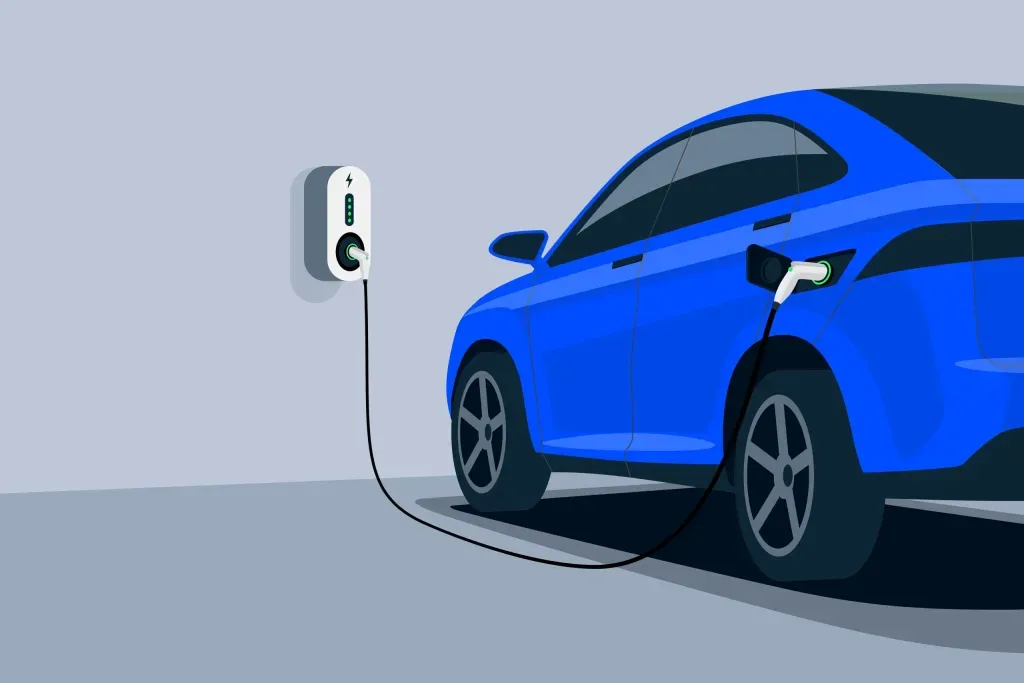
If you’re planning on purchasing an electric vehicle (EV) or already own one and want to make driving and charging it as efficient as possible, there are some key things to consider. As one of the leading EV charger installation electricians in Virginia, the team from RD Matthews Electrical Contracting has collected some insights for you here about EV charging and ownership.
Virginia’s EV Charging Infrastructure
With so many drivers interested in EVs because of their reduced carbon emissions and savings, many states have invested in EV charging solutions, including Virginia. In 2021, the state boasted 1,139 public charging stations with 3,301 ports for all charging speeds. Beginning in 2023, the state announced that it would invest in EV charging infrastructure and over the next five years install anywhere from 19-26 more charging stations that comply with the National Electric Vehicle Infrastructure (NEVI) Formula Program’s recommendations.
Different Charger Types Available
For those wanting to install an EV charger at home or on their commercial property, EV charger installation electricians offer several different types with different levels and charging times including:
- Level 1 Chargers: These are the most common chargers for home use and they’re also the slowest, designed to enable EV owners to simply plug their vehicle into a 120-volt outlet. It’s also worthwhile remembering that Level 1 chargers can take anywhere from 8-20 hours to fully charge your EV. This does not need an electrician to install an outlet.
- Level 2 Chargers: This type of charger uses 240 volts and is the most common type in public places, like malls and gas stations throughout Virginia. However, Level 2 chargers can also be installed in the home, but you’ll need to have an electrician install a dedicated circuit. Due to the increased voltages, these chargers can fully charge an EV in a fraction of the time a Level 1 charger can, in most cases only 3-6 hours.
- DCFC/Level 3 Chargers: Level 3 chargers, also called DCFC chargers, offer the most charging power. However, they require specialized installation and dedicated equipment since they operate on 480 volts of direct current. This means you won’t find them in homes or small commercial establishments. It only takes 30 minutes to charge an EV battery between 50 and 80% with Level 3 chargers. However, not all EVs are equipped for Level 3 chargers, so make sure your vehicle can accommodate it before you purchase your EV or install a charging port. Level 3 chargers are not installed in residential buildings.
What’s the Cost of Owning an EV in Virginia?
Now that we’ve gotten the logistics of charging an EV out of the way, you’re probably wondering what the overall cost of EV ownership is in Virginia. There are a range of factors that impact this, everything from insurance to general maintenance and charging costs. However, you’ll also gain a relatively quick return on your investment due to the vehicle’s efficiency. In addition, you’ll benefit from financial incentives offered by state and government agencies.
When determining the average cost, you’ll need to consider your vehicle type in addition to the factors mentioned above. However, studies have reported that the average cost of charging an EV in Virginia is approximately $0.146 per kilowatt hour (kWh).
What Are the Incentives for Owning an EV in Virginia?
Virginia offers incentives for EV ownership that include financial incentives from the state and private entities. EV owners can apply for a state rebate of $2,500 for purchasing one, and also an enhanced rebate of $2,000. There is also a $7,500 federal tax credit that EV owners can qualify for.
Some of the private incentives offered by different companies and organizations throughout the state include:
- Danville Utilities: This company provides $125 rebates for Level 2 charging stations. To qualify, EV owners must enroll in the company’s energy response program. On your first registration anniversary, you’ll also receive a $40 incentive.
- Rappahannock Electric Cooperative (REC): Residential EV owners enrolled in the REC time-of-use charging pilot program receive a $7 energy bill credit. But it only applies to the first 200 EV owners that enroll.
- Dominion Energy: EV owners enrolled in Dominion Energy’s energy response program are eligible for a $125 rebate when purchasing and installing a Level 2 charging station. Like Danville Utilities’ program, owners also receive $40 on their registration anniversary.
Does Virginia Tax EVs?
Virginia has an EV tax. However, it’s relatively small and is in addition to the standard registration fee.
What’s the Cheapest Way to Charge an EV in Virginia?
There are many free charging stations throughout the state, and this is the cheapest way to charge your EV in Virginia. If not, Level 1 chargers are the most expensive and slowest, and Level 3 chargers are the cheapest and most efficient.
What’s the Cheapest Time of Day to Charge an EV in Virginia?
The cheapest time of the day to charge your EV is outside of peak hours (11 p.m.-7 a.m.) whereas the costliest is between 2 p.m.- 9 p.m.
Are EVs in Virginia Required to Undergo a State Inspection?
Yes. All vehicles in Virginia require a state inspection including EVs.
Contact us for a Reliable EV Charger Installation Electrician Today
If you want to install a charging station in your home or on your commercial property our expert EV charger installation electricians can help. Learn more about the process and our services by contacting us online today or calling (540) 840-2933.